6 Alternative Investment Options Nigerians Should Know
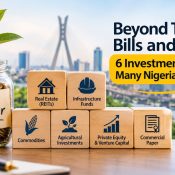
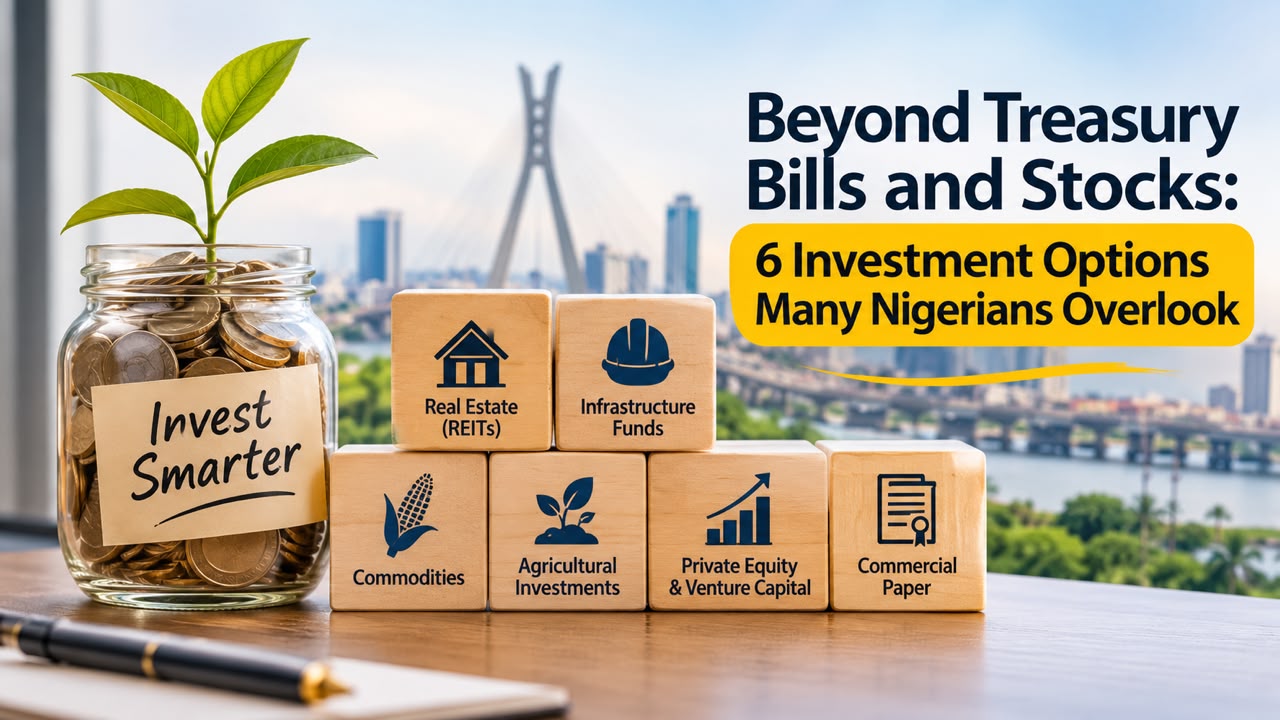
Beyond Treasury Bills and Stocks: 6 Investment Options Many Nigerians Overlook
When people talk about investing in Nigeria, the conversation often revolves around Treasury Bills, fixed deposits and stocks. These are familiar options, and for many people, they are where their investment journey begins.
But there is more to investing than these traditional choices.
Have you considered investing in a property without buying an entire building? Or putting money into a business that is not listed on the stock exchange? What about agricultural products or infrastructure projects?
There are several investment opportunities that do not always get as much attention, yet they offer different ways to put money to work.
Here are six options worth understanding.
1. Real Estate Investment Trusts (REITs)
Owning property is often seen as a major investment goal. However, buying land or an entire building requires significant capital, and managing property comes with its own responsibilities.
Real Estate Investment Trusts (REITs) offer another way to participate in the property market.
A REIT pools money from different investors and uses it to invest in income-generating properties such as residential buildings, shopping centers, office spaces and other commercial real estate.
Instead of purchasing and managing a property yourself, you buy units in the trust and may receive a share of the income generated, depending on the REIT’s structure and performance.
Why consider it?
REITs allow investors to gain exposure to real estate without having to purchase an entire property. They can also provide access to rental-income-generating assets.
However, returns are not guaranteed. Property values, rental income, occupancy levels and market conditions can affect performance. It is also important to understand how easily you can sell your units when you need your money.
2. Infrastructure Funds
Think about the roads people travel on, the power facilities businesses depend on and the transport systems that keep cities moving. These are all part of the infrastructure that supports economic activity.
But developing and maintaining infrastructure requires substantial funding.
Infrastructure funds give investors an opportunity to participate in this sector by pooling money into infrastructure-related assets, businesses or projects. Depending on the fund, these may include power, transport, telecommunications and other essential services.
Why consider it?
Infrastructure investments can provide exposure to long-term projects and sectors that support economic development. Some may also generate income over time.
However, these investments are not without risks. Project delays, regulatory changes, construction costs and financing challenges can affect performance. Some funds also require investors to commit their money for longer periods.
3. Commodity Investments
You may not think of cocoa, gold, maize or crude oil as investment opportunities, but these are examples of commodities that are traded in financial markets.
Commodity investing allows people to gain exposure to the prices of these underlying goods without necessarily buying, storing or physically handling them.
This can be done through different investment structures, including commodity funds and exchange-traded products.
For example, someone interested in gold may invest through a product that tracks gold prices rather than purchasing and storing physical gold.
Why consider it?
Commodity investments can help diversify a portfolio because their prices do not always move in the same direction as stocks and bonds.
However, commodity prices can change significantly. Weather conditions, global demand, supply disruptions, exchange rates and geopolitical events can all influence prices. Investors should understand the particular product they are buying and the risks involved.
4. Agricultural Investments
Agriculture is an important part of Nigeria’s economy, but investment in the sector goes beyond owning farmland or starting a farm.
There are opportunities to invest in agricultural businesses, commodity-related funds, food processing, storage, distribution and other parts of the agricultural value chain.
For instance, an investment may provide financing for the production, processing or distribution of agricultural commodities. The investor’s return will depend on the structure and performance of the particular investment.
Why consider it?
Agriculture is connected to everyday needs, particularly food production and supply. This creates opportunities across different stages of the value chain, not just farming itself.
However, agricultural investments carry risks. Weather conditions, pests, poor storage, transportation challenges, price fluctuations and operational difficulties can affect returns.
It is important to understand exactly where your money is going, who is managing the investment and how returns are expected to be generated. Be particularly cautious of schemes promising unusually high or guaranteed returns.
5. Private Equity and Venture Capital
Not every investment opportunity is found on the stock exchange. Some businesses are privately owned and are not available for purchase through publicly traded shares.
Private equity and venture capital provide opportunities to invest in these businesses.
Private equity generally focuses on established companies that need capital to expand, improve operations or restructure. Venture capital, on the other hand, often supports younger businesses and startups with significant growth potential.
For example, an investor may provide capital to a growing technology company in exchange for an ownership stake. If the business grows successfully, the value of that investment may increase.
Why consider it?
These investments allow people to participate in business growth beyond publicly listed companies. They can also support businesses that need funding to develop products, expand operations or enter new markets.
However, private equity and venture capital are generally long-term investments. They may require substantial capital, and investors may not be able to withdraw their money whenever they want. There is also the possibility of losing some or all of the investment.
6. Commercial Paper
Companies sometimes need money to manage everyday business activities, purchase inventory or meet short-term financial obligations. Rather than relying entirely on bank loans, eligible companies can raise funds through commercial paper.
Commercial paper is a short-term debt instrument issued by a company to investors. When you invest in it, you are essentially lending money to that company for an agreed period.
The company is expected to repay the principal along with the agreed return at maturity.
Unlike buying shares, investing in commercial paper does not make you a part-owner of the company.
Why consider it?
Commercial paper offers another way to access short-term investment opportunities and earn returns from lending to businesses.
However, the company’s ability to repay is important. If the issuing company experiences financial difficulties, it may struggle to meet its obligations. Before investing, look into the company’s financial position, creditworthiness, investment tenor and the terms of the offer.
Before You Invest, Here Are a Few Things to Consider
Discovering a new investment option can be exciting, especially when it offers something different from what you are used to. But an investment should never be chosen simply because it sounds attractive or promises impressive returns.
Before committing your money, take time to understand:
* The risk involved: What could go wrong, and how much of your money could you potentially lose?
* Access to your money: Can you withdraw when you need to, or will your funds remain invested for a specific period?
* Your investment timeline: Are you investing for a few months, several years or much longer?
* The minimum amount required: Does the investment fit your available capital?
* Who is managing the investment: Is the provider credible and properly registered or authorised where required?
* How returns are generated: Do you understand where the expected returns will come from?
Most importantly, do not invest in something you do not understand. Take time to review the investment documents, ask questions and assess whether the opportunity aligns with your financial goals.
The End2End Perspective
Investing is not about putting your money into every opportunity you come across. It is about understanding the choices available and knowing which ones make sense for your financial situation.
Some investments may offer regular income, others may focus on long-term growth, while some may require you to commit your money for several years. Each comes with its own opportunities, limitations and risks.
At End2End Advisory, we believe that informed investment decisions begin with understanding the available options and assessing how they align with your financial objectives.
Whether you are exploring new investment opportunities or reviewing your existing portfolio, taking the time to understand your options can make a difference.
Looking to explore investment opportunities beyond the traditional options? Speak with End2End Advisory to take a more informed approach to your investment decisions.