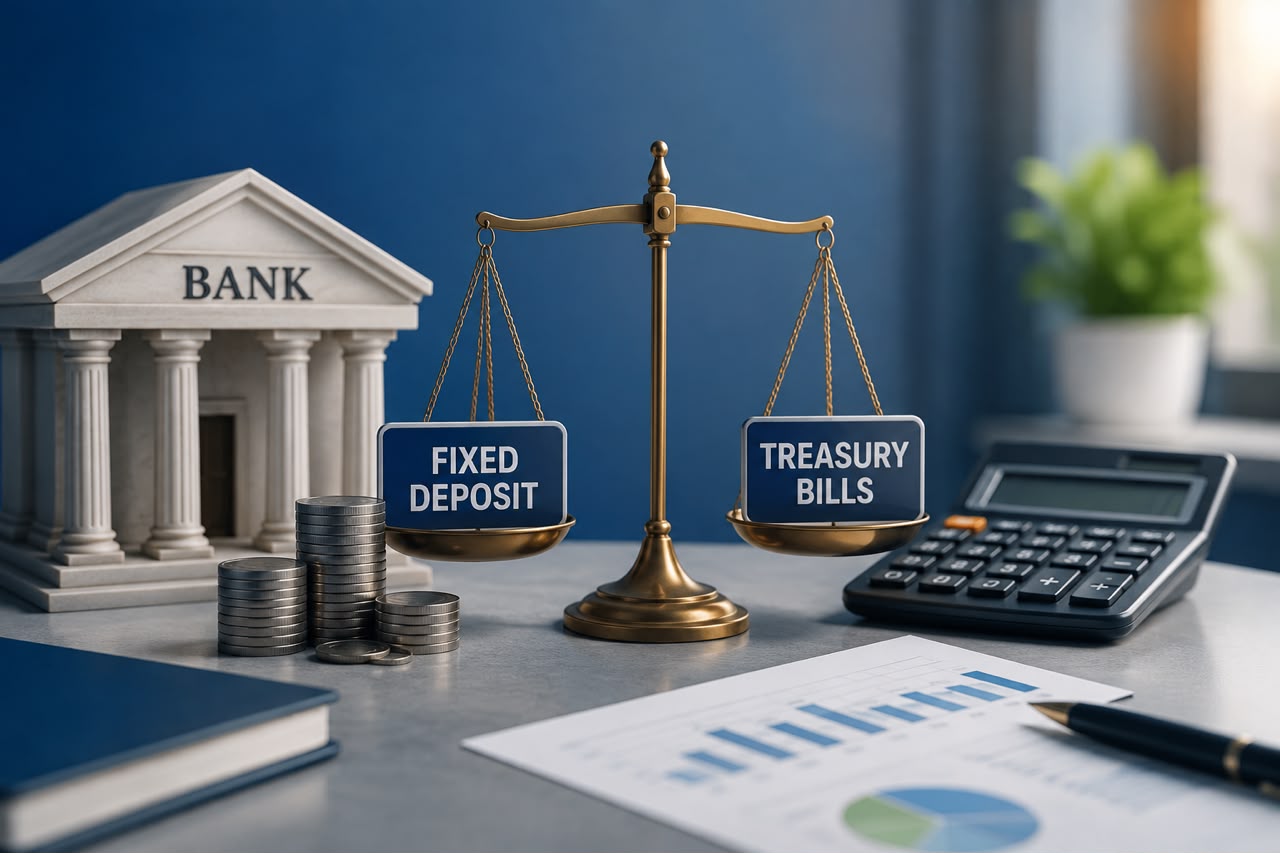
Treasury Bills vs. Fixed Deposits: Which Is Right for You?
For investors looking for relatively conservative ways to earn returns on their money, Treasury Bills (T-Bills) and Fixed Deposits are two options worth considering.
While both can provide predictable returns, they differ in structure, liquidity and risk exposure. Understanding these differences can help investors make decisions that align with their financial goals.
Understanding Treasury Bills
Treasury Bills are short-term government securities issued by the Central Bank of Nigeria on behalf of the Federal Government. They typically have maturities of 91, 182 and 364 days and are issued at a discount, with investors receiving the face value at maturity.
The return on T-Bills is influenced by prevailing market conditions and auction outcomes. Nigeria’s current interest-rate environment remains relatively high, with the CBN retaining the Monetary Policy Rate at 26.5% in July 2026.
Understanding Fixed Deposits
A Fixed Deposit allows you to place money with a bank for an agreed period at a predetermined interest rate.
The rate offered varies between banks and depends on factors such as the amount invested, tenor and prevailing market conditions. Some banks may also impose conditions or penalties where funds are withdrawn before maturity.
For investors considering this option, it is important to compare the actual return, tenor, withdrawal conditions and the financial strength of the institution rather than focusing only on the advertised interest rate.
Eligible deposits with Nigerian banks are protected under the NDIC deposit insurance scheme, subject to applicable limits. The maximum coverage for deposit money banks is currently ₦5 million per depositor, per bank.
What Should Investors Consider?
The question isn’t simply which investment pays more?
Investors should consider:
- Investment horizon: How long can you leave the money invested?
- Liquidity: Will you need access to the funds before maturity?
- Risk: Are you comfortable with government securities or bank deposit exposure?
- Return: What will you actually earn after applicable charges and taxes?
- Inflation: Will the return preserve or improve your purchasing power?
- Financial goals: Does the investment support what you are trying to achieve?
Which One Is Right for You?
There is no universal answer.
Treasury Bills may appeal to investors seeking exposure to short-term government securities, while Fixed Deposits may suit those who prefer a straightforward bank-based investment with an agreed return.
The better choice depends on your financial objectives, investment timeline, liquidity needs and risk tolerance.
The End2End Perspective
Investing should not be about chasing the highest advertised rate. It should be about choosing an investment that fits your overall financial strategy.
At End2End Advisory, we help investors understand opportunities, assess risks and make informed financial decisions.
Before you invest, understand the investment, and understand why it fits your goals.